In my mission to try as many massage school clinics as possible, I ventured into the Australasian College of Natural Therapies clinic in Sydney last week.
I booked in for a one hour remedial massage, as I hadn't had that type of massage for ages. Remedial massage is deliberately firm and really gets into the muscles and tissues. It's in these kind of massages that you often "discover" tense areas in your body that you weren't even aware were tense.
The clinic was professionally run, and the treatment rooms were basic, but clean and comfortable. My therapist introduced herself to me, did a quick postural assessment and ask where I'd like her to focus on. Neck and shoulders please...a very typical reply!
She was using a massage balm instead of oil and we discussed the pros and cons of oils vs balms. The balms didn't seem as greasy as oils, but still provided good glide - this is important when you're trying to roll smoothly over tense or dense areas of muscle.
Interestingly, the therapist started working on my lower back and detected tension there (surprise surprise for a person who'd went most of the week curled over a computer!). She then started to work on my glutes - another area where a lot of people store tension - and repressed anger, I once learnt in a personal development course. I was trying to pay attention to the techniques she was using (if I like the way something feels in a treatment, I always ask the therapist to show me what they're doing), but started to drift into the land of nod. Even though the massage was very firm, it still had the overall effect of relaxing me.
At the ACNT clinic, instructors actually come into the treatment room mid-massage to observe what their students are doing. This is the first clinic I've visited where that's happened! I had been asked prior to the massage if this was ok. The instructor observed for a bit then started to give my therapist some tips about how to work particular areas up the side of my shoulder. He then demonstrated on one side of my shoulder while she tried on the other side.
Hands on training like this is invaluable for therapists, and I was really impressed at the quality of teaching, and the supervision of students. I believe that the more clinic hours students do under such close supervision, the better therapists they'll be when they go out to do it commercially.
The ACNT clinic offers a wide range of treatments including massage, naturopathy, herbal medicine, nutritional consulations, aromatherapy, homoeopathy, reflexology and beauty treatments.
At $30 for a one hour remedial massage, this is one of the best value massages I've had - particuarly as the clinic is in the city (Foveaux Street, near Central Station).
The clinic is available to the public - check out their website, call to make a booking on 02 9218 8855 or email clinicreception@acnt.edu.au. I highly recommend it!
Sunday, October 26, 2008
Still loving those massage school clinics!


Monday, September 22, 2008
Generating interest at events with seated massage
It was my pleasure to spend an action-packed few days last week doing seated massage at one of the year's big IT Trade Shows - Cisco Networkers. One of the exhibitors at the event, APC by Schneider, decided to offer free seated massages for visitors to the company's booth. It proved to be a great addition to their stand, with people queuing up for massages for pretty much the entire time - we got through 100 seated massages in 2.5 days!
While the massage was by no means the main focus, APC used it, and a Wii playstation to attract visitors to their booth. This gave the APC sales team a chance to engage with their visitors, and created a fun and lively atmosphere.
Curiously, while other exhibitors offered an array of prizes and competitions on their booths, there were no other seated massage therapists at the event. This surprised me, but it worked out well for APC, who were able to claim another yet unique point of differentation on their booth.
APC's Channel Manager, Joyce Sl Ng, said, "We recently engaged Melanie for a 3-day exhibition in Brisbane. A free 10-min shoulder & back massage was offered to everyone who visited our booth during this time. It has been a fantastic experience for all who took up the offer. The free massage was an absolute winner at this event; attracted a lot of traffic to our booth during the exhibition time. Melanie's service is fabulous & professional. Highly recommended for corporate events."
If you are planning an event - large or small, consider offering seated massage as a way of generating interest, saying "thank you" to customers, staff or guests, or just providing a little something different.
Seated massage is extremely versatile and requires minimal space. If your guests are seated, for example at roundtables or business meetings, the massage therapist can massage them in those seats. Alternatively, the purpose-built massage chair can be set up in the corner of a room, meeting or board rooms, booths etc.
Feel free to contact me to discuss the possibility of seated massage at your next corporate event.
Sunday, September 21, 2008
EMPOWER - a new magazine worth reading

I discovered a new magazine yesterday - Empower.
The brainchild of Helen Rosing, a businesswoman and success coach, many of Empower's articles are written by coaches with different specialties - so they're all very action-oriented, positive and encouraging.
In the launch edition I've just read, there were articles on motivation, the art of forgiveness, complementary therapies such as Reiki and Bowen Therapy, business, career and wealth creation. Almost all of the articles list five or so key tips and provide additional useful resources. Empower also has a group on Facebook, which I imagine will start to generate some interesting conversations over time.
"Giving in Kind" was an article about random acts of kindness, and you can check out reader's acts of kindness at Empower's website. It's nice...uplifting to read about this sort of stuff. And there's a fairly substantial collection of free content on the site.
I really enjoyed the first edition of Empower and hope that the magazine will succeed. I think it's filling an important gap in the women's magazine market.
Monday, September 15, 2008
Free reflexology treatments during World Reflexology Week!
Feel like a free reflexology treatment?
If you're around the Burleigh Heads area next Friday (26 September) check out the Reflexology Open Day at Massage Schools of Queensland.
Members of the public are invited to attend the event, and will hear one of Australia’s pioneers in reflexology, Heather Edwards, discuss and demonstrate this fascinating holistic therapy. Visitors can then sample free reflexology treatments, with qualified reflexologists on hand to answer any questions.
Date: Friday, 26 September 2008
Time: 9.45am for a 10.00am start; reflexology treatments will run all day till 5.00pm
Venue: Massage Schools of Queensland, Level 1, 36 Kortum Drive, Burleigh Heads, QLD 4220
Ph: 5576 6366
Heather is involved in many firsts’ in reflexology education in Australia, most notably being one of Australia’s first registered reflexologists with the International Institute of Reflexology. She is a trained teacher, Aromatherapist and herbalist. She is a founding member of the Reflexology Association of Australia (RAA) and the International Council of Reflexologists (ICR).
Heather commenced her training with Dwight Byers in 1984 and became Australian Director in 1991. She has developed, co-ordinated and taught reflexology courses throughout Australia and Singapore for the past 19 years.
Having just completed my introductory reflexology studies with Heather, I'm sure that anyone who wants to learn more about reflexology, will find her talk invaluable.
Sunday, September 14, 2008
Illusion and Reality
Wow - I just watched two fascinating videos on YouTube: Illusion and Reality 2012 Part 1 and Part 2.
There are so many interesting concepts in the 20 minutes worth of footage - everything from the significance of the year 2012, the major shift in both the physical and spiritual vibrations of every being in the universe, individual and world chakras, perception and reality, fear and love.
Really too much to summarise in a blog post, so you'll have to check it out for yourself!
Wanted: Chief Happiness Officer
 I was flicking through the Sunday papers today and came across an article by psychologist and executive coach, Dr. Timothy Sharp, called Against the Odds.
It was about how easy victories don't bring much satisfaction, whereas well-fought battles invariably do. How true is that! It was an interesting, upbeat article, but what really caught my attention was Dr. Timothy's bio:
"Dr. Sharp is a best-selling author, a corporate speaker and consultant, and Chief Happiness Officer at The Happiness Institute."
I'm feeling happier having used the word 10 times so far in this post - imagine how happy Dr Happy, the Chief Happiness Officer of The Happiness Institute must be!
The e-book was based on the philosphy that:
- Happiness is the ultimate purpose in life
- Happiness is achievable, for all of us
- Happiness is determined more by our minds than by our circumstances
- The disciplines that will lead to and enhance happiness (such as helpful thinking and good habits) can be learned and mastered, with practice.
Thursday, September 11, 2008
Infatuated by shakuhachi
I had never heard of Riley Lee until I saw him profiled on a recent TV show. The segment was about the shakuhachi, a traditional Japanese flute made from bamboo. According to his website, Riley Lee began playing the shakuhachi in Japan in 1971, studying with Chikuho Sakai until 1980, and has been a student of Katsuya Yokoyama since 1984. He was given the rank of Dai Shihan (grand master) in 1980.
He is Australia's only Grand Master of the shakuhachi, and one of the few outside Japan.
As well as my love of all things Japanese, I’m always on the lookout for relaxation music to play during massages (or for my own use!).
The shakuhachi music was just amazing! I was transfixed by the hauntingly beautiful sounds produced by such a seemingly simple instrument.
Lee’s website says:
“It has no pads like those on a western flute. There is no reed, like on a clarinet or saxophone, and no strings like on a guitar or violin. It doesn't even have a mouthpiece like the recorder. There are no mechanisms inside it that make the sound, like those inside a piano or organ.
With only five finger holes, (four in the front of the flute and one in the back for a thumb), it has less finger holes than almost any other common wind instrument, including the penny whistle. Yet despite its simple construction, the shakuhachi in the hands of a master can produce an unbelievable wide range of sounds. It can be as
expressive as the human voice.”
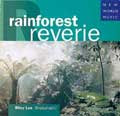
I was inspired to download an album from iTunes straight after the show – I chose Rainforest Reverie which combines Lee’s shakuhachi music with the natural sounds of a rainforest. You can hear a small snippet of one of the tracks here.
I love the music – it’s so calming, and perfect for anyone living in a bustling city who needs to get a sense of space and peace.
The shakuhachi grand master is as prolific as is he is talented. He teaches and performs frequently, and was the Artistic Director for the recent World Shakuhachi festival 2008, which brought together as many as 400 shakuhachi enthusiasts.
I was also fascinated to learn that Lee has developed a series of exercises that are designed to create an awareness of one's breath while improving the strength and control of the muscles used in breathing. His workshops last from one to six hours, and single sessions have been attended by as many as two thousand people. Wow!
If you’re stressed out and needing a good dose of relaxation, check out the magical music of Riley Lee’s shakuhachi.
Be positive about your health!
I'm sure we all know someone who loves to bask in their ill health.
New research suggests that people who focus on ill heath (whether it is perceived or real) could actually be talking themselves into illness, and even an early death.
Healthy Pages reports on an article in the Medical Care journal, where researchers from Duke University discovered the astonishing difference in survival rate for 3,000 heart patients who were requested to describe their health as 'poor' or 'very good', irrespective of their condition. Those who said 'very good' were three times more likely to survive.
"This report supports the results from Johns Hopkins University who questioned 5,000 people over 65 years of age about their health. Those who said 'poor', regardless of their actual condition doubled their risk of death within five years."
A positive attitude about health can ward off mental distress and may help provide important protection against diseases," says Professor Gunnar Engstrom, MD, from Lund University, Sweden."
The article also goes on to suggest that laughter can play a huge role in physiological stimulation that leads to a number of health benefits by reducing stress, and boosting antibodies that fight infection.
Holistic therapies such as massage and reflexology have similar benefits, in that they have also been proven to reduce stress, and improve the body's circulatory systems - which assist in the production of antibodies.
Next time that person you know is moaning about their ill health, suggest that they watch a funny movie, have a giggle or have a massage!
Saturday, September 6, 2008
A thoughtful housewarming gift
Wow - it's been a long time between posts! I've been busily renovating my place, which, I'm happy to say, is now almost complete.
I've lived in rental accommodation for much of the last 10 years and as my Dad and I were replacing, repainting or revamping virtually every surface in my place over the last three months, it got me thinking that I would like to have some sort of personal housewarming ceremony. Of course, I'll have a house-warming party with family and friends, but I wanted to have a little ceremony, a ritual if you like, that brought new energy into the place and put my own stamp on it.
As I painted wall after 14ft wall, I thought about how I would represent the various natural elements in my place, and started to think about the types of qualities I wanted to bring in. I decided I would have this little ceremony when all the boxes were unpacked, and I had consolidated all of my belongings from London and those stored at my parent's house.
Last week, as I was shovelling boxes of my posessions into the flat, I happened to pass the postman, who gave me a package. I wasn't expecting anything, so it came as a bit of a surprise.
And what a gorgeous surprise it was - a Sacred Space Clearing Pack, from a cool little NSW company called Your Sacred Space. It was from my friend Mike, who is studying shamanic healing.
The gift box was beautiful (I'm a sucker for stylish packaging), and inside I found a quartz crystal, candle, room mist, smudge stick, bag of salt, and helpful instructions how to use it all to "support you clear your home or work environment".
I love crystals and have several clear quartz stones. The one in the kit had been programmed to assist in the clearing of the space.
The room mist was Your Sacred Space's own blend of rosemary, lemongrass and eucalyptus that had also been amplified with quartz crystals and sodalite. The candle contained the same blend of oils and was a lovely calming green colour.
The smudge stick was interesting - I hadn't used them before, and the instructions suggested that "smoke from the white sage engulfs releases and clears energies."
Finally, the salt can be used on a continuing basis to absorb energies from the space, by placing in a glass or ceramic bowl.
It was a really thoughtful gift (thanks again Mike!), and I'm looking forward to unpacking the final boxes in the next few days and doing my space-clearing.
Suzanne Lewarne, founder of Your Sacred Space runs various workshops in Sydney about working with energy and crystals and offers holistic healing services. Check it out, and consider a space-clearing kit if you or someone you know has just moved homes or offices, or simply want to reinvigorate your personal space.
Tuesday, July 29, 2008
Choosing massage supplies - where do you start!
Massage therapists have a reasonably limited number of "tools of the trade" - you'd think a comfy massage table, oil and towels would pretty much be it.
Not so! I've tended to choose my oils based on word of mouth recommendations - certainly, when I was training we quizzed the teachers about which oils they used and recommended, and it's always useful to ask what other therapists use. In the UK, I used carriers oils from Absolute Aromas, but there are a huge array of balms, lotions and carrier oils, and an even larger range of essential oils - the delicious smelling oils used in aromatherapy- to choose from.
The texture and smell of the oil, lotion or balm can have a dramatic impact on the quality of the massage. If it's too greasy, the therapist will have difficulty keeping contact with the client's body, and if it's too dry, it's difficult to get "glide" - so the massage will feel jerky. In reflexology class this week, our teacher has been discussing the Young Living range of oils, and has brought in various samples for us to smell and use. We don't use any oil in reflexology, but therapists will often use essential oils in diffusers or oil burner while they're doing a treatment. Similarly, reflexology can be done as part of a massage, so the issue of oils typically comes up in any gathering of massage therapists.
The people at Young Living do a great job of marketing - I love the names of their oil blends. Of course they have blends with names that you'd expect, such as Joy and Peace and Calming, but something like Highest Potential makes me want to go out and try it straight away.
According to Young Living's website:
"Highest Potential™ is an exotic blend of therapeutic-grade essential oils designed to increase your capacity to achieve your highest potential. It combines the uplifting and inspirational qualities of Australian Blue™, with the power of Gathering™, to hlp bring greater unity of purpose. Jasmine is added to enhance self-confidence, while ylang ylang calms, soothes and helps release feelings that might otherwise get in the way."
It's like a super blend of oils, which includes: Australian Blue, [a blend of blue cypress (Callitrus intratropica), ylang ylang (Cananga odorata), cedarwood (Cedrus atlantica), blue tansy (Tanacetum annuum), and white fir (Abies concolor)], Gathering essential oil blend [galbanum (Ferula gummosa), frankincense (Boswellia carteri), sandalwood (Santalum album), lavender (Lavandula angustifolia), cinnamon (Cinnamomum verum), rose (Rosa damascena), spruce (Picea mariana), geranium (Pelargonium graveolens) and ylang ylang (Cananga odorata)], jasmine (jasminum officinale) and ylang ylang (Cananga odorata). Wow - how's that for a list of ingredients!
Apparently, Young Living's oils are therapeutic grade, and the company claims it is the largest supplier of essential oils in the world. My first impression of the company this week is that their oils smell and feel great. I've ordered a seven-oil starter pack to check them out, and can't wait to work with them, or simply use them around home.
One of my massage study buddies in the UK also put me on to Tui - Balmes and Waxes. I'd never used waxes in my massages, but I was keen to learn more about them. Tui points out that waxes have an inherent benefit over oils in that oils are easily spilled, and can become so concentrated on bed linen that it proves impossible to wash out. Yuuuuuk!
 Tui's products are a blend of natural, organic beeswax and high quality vegetable oils. I like the fact that there are no artificial preservatives, emulsifiers, colouring agents, stabilisers or chemical additives are used in their products. I also ordered a couple of their blended waxes and one balm to try out in the coming weeks.
I think it's important for therapists to choose their oils carefully and to be able to offer different products for different situations - some people prefer that oil is not used, particularly if there are no shower facilities in the massage room or clinic, and they have to go back to work or out to an appointment after their treatment.
I also think trade shows are a great way to check out new products, particularly if you're new to the industry.
I'd love to hear other people's views on oils and suppliers in Australia or the UK - feel free to post your thoughts on the blog.
Sunday, July 27, 2008
Student clinics at massage schools - great value and great experience
Massage Schools Queensland (MSQ), the school where I'm currently doing my reflexology studies, runs a student clinic, whereby students practice on members of the public, at highly discounted prices.
I'd come across the clinic concept when I did my massage studies in the UK, and had to participate in one clinic day. It seems to be different in Australia, or certainly at this school. Cert IV students at MSQ are required to do 40 hours of massage in the clinic, on top of their 100 or so practice hours outside of the school.
I think it's a great idea that benefits the soon-to-be massage students by giving them a broader range of experience while they're still under the guidance of teachers, while giving the public access to massage and other therapies such as aromatherapy, remedial massage and reflexology at greatly reduced prices.
Until I'd participated in a clinic day and received a massage at one, I'd always been a bit sceptical about whether I wanted a "beginner" practicing on me. However, I was extremely impressed at the quality of the massage I had at the MSQ clinic last week - done by one of my reflexology study buddies after our class.
Everything about the clinic, the pre-treatment consultation and the massage was professional. It was more thorough, in fact, than many massages I've paid full price for.
I think the main benefit of student clinics is that the students are keen to do their massage well, and are constantly receiving feedback from tutors and other students in class, and then put it to practice immediately in the clinic. It also simulates an actual clinic environment, so students gain relevant experience in the logistics of back-to-back appointments, changing treatment rooms over and building rapport with clients in a short period of time. It's also a great, cheap way to try out massage if you've never had one.
I completely recommend the MSQ clinic and am looking forward to another massage in a couple of weeks.
Check out your local massage school's clinic - chances are you'll save money and get a great massage treatment!
Wednesday, July 23, 2008
Fixated with feet!
 I'm nearly halfway through my reflexology unit and I continue to be amazed (and mortified) about what my feet are revealing about the inner workings of my body and mind. It's SO interesting!
Heather, our teacher, goes off onto what she calls digressions, but for us, they're the most interesting parts: like how the hands relate to how you're managing life and the things around you - basically how you're "handling" things. And the feet are about stepping forward in life.
We're getting down and gritty with bunions and calluses, heel fissues and puffiness, all of which have their own meanings. Bunions for example, which cause the big toe to bend away from the centreline of the spine reflex, represent moving away from one's path.
Heel fissures, which are deep, sometimes open cracks at the base of the heel, are directly related to the base of the spine, and can represent carrying extra weight or burdens in life.
We're learning which part of the feet correspond to the spine, and how working the spine reflex on the foot can actually reduce tension in say, the lower back! How cool is that!
The recommended textbook, "Better Health with Foot Reflexology" is an equally fascinating read, as it goes into the numerous reflexes in depth.
Today after class, I'm getting a therapeutic massage in the college's clinic, so will be checking out for similarities and differences in massage techniques. I can't wait.
I wonder what my feet will reveal today!
Tuesday, July 15, 2008
Reading the feet - reflexology reveals all
As part of the conversion of my UK massage qualifications to a recognisable Australian qualification, I have to do 30 hours of reflexology studies. I'll be doing this in 10 x 3-hour lectures over the next 4 weeks, and I started the course today at Massage Schools of Queensland.
Our teacher is a veteran in reflexology, having been one of the first people to be licenced to practice and teach reflexology into Australia. She's been doing it since 1984 and clearly knows her stuff. I was hooked after the first 10 minutes of discussion about reflexology.
According to the Reflexology Association of Australia, this modality's governing association in Australia, reflexology is:
"A gentle, holistic therapy based on the principle that certain parts of the body reflect the whole. Reflex points, which relate to all parts of the body, can be found in the feet, hands and ears. A reflexology treatment is a systematic working of these points, stimulating the body's own natural healing process, resulting in better health."
The reflex points are typically depicted in a map like the one below. The highlighted area below shows the area on the foot that represents the liver, for example. Theoretically, if this area is a bit tender or numb while a reflexologist is doing a sequence across your foot, it could indicate a problem with the liver or surrounds.

I had this experience first hand in the class today, as the teacher demonstrated the sequence on me. After a couple of months worth of farewells and reunions (and the associated drinking that seems to have gone with that), this area of my foot was really sensitive! She pointed out this sensitivity before I could even start justifying the cause...! So, lotsa of fruit, vegies and healthy eating for me in the next few weeks.
In any case, it was an eye-opener, and I can't wait to learn more about the various reflex points, and see this stuff in action for myself.
Reflexology has actually been used for thousands of years. Like massage, our forebears recognised the benefits of touch and have been practicing various forms of reflexology for years.
Reflexology is good for you because it:
- reduces stress and tension
- improves circulation
- balances the nervous system
- boosts lymphatic function thereby reducing oedema, reducing toxicity and improving immunity
- stimulates sluggish, congested systems
- reduces pain
- enhances the body's natural healing process, improves sleep, increases energy and vitality
And, just as you can read the feet, you can read the hands in a similar way. Cool huh!
If you are interested in finding a qualified reflexologist in your area, the Reflexology Association has a state-based search. Or ask your massage therapist - they may be able to help out
* The foot map image is the copyright of dorling kindersley books, who seem to have some cool resources for reflexology students or anyone else interested in their feet!
Saturday, July 12, 2008
Have a heart!
 I went to a fascinating talk earlier this week at the Sanctuary Cove Rec Club. One of the members of the club spoke first - a 70-something year old guy who'd had a heart attack 18 months earlier. He was actually at the club's gym working out when the heart attack happened. The quick response of the team meant that there was no lasting damage, and he made a full recovery.
A volunteer from the Heart Foundation spoke next, and rattled off some scary stats about cardiovascular disease. This disease:
- kills one Australian every ten minutes.
- affects more than 3.5 million Australians.
- prevents 1.4 million people from living a full life because of disability caused by the disease.
- was suffered by one in six Australians in 2004, and affected two out of three families.
- claimed the lives of almost 48,000 Australians (35 per cent of all deaths) in 2004 - deaths that are largely preventable.
According to the Heart Foundation, the risk factors include:
- smoking
- high blood cholesterol
- physical inactivity
- diabetes
- high blood pressure
- being overweight
- depression, social isolation and lack of social support
Being male and having a family history of early death from heart disease are also heart disease risk factors. The stats about smoking's impact on heart disease were staggering - people who smoke are four times more likely to have a heart attack than non-smokers!
The rest of the talk focused on how healthy living and eliminating or managing controllable risk factors can help to reduce your chances of suffering cardiovascular disease.
The key take outs from the talk were really about maintaining a healthy, active lifestyle - it's the same old stuff about moderation, moderation, moderation!
Hearing the stats certainly drove the point home about how prevalent heart disease is - and how preventable it could be if heeded the advice of the Heart Foundation.
Check out the Healthy Living section on their website for tips about how to love your heart a little bit more.
Saturday, June 21, 2008
Mapping massage qualifications across countries – not as straightforward as you would think!
I am learning a thing or two about the differences in massage qualifications between countries! It would appear that a massage therapist in Australia is required to undergo far much more study to qualify for a Diploma, than a massage therapist in the UK.
When I simultaneously completed my ITEC Diploma Course in Holistic Massage and BTEC Professional Diploma Course in Holistic Massage Practice in the UK in 2007, I was led to believe that the ITEC qualification was recognised almost globally - and certainly in Commonwealth countries such as Australia. I was aware that the higher level BTEC qualification was specific to the UK, but it gave me a deeper knowledge of massage techniques than the ITEC course would have
I thought that when I relocated back to Australia, the transfer of my qualifications would be a simple affair – have someone review and approve my UK qualifications, join the Australian Association of Massage Therapists, get insurance and get out there massaging commercially. After all, in the UK, I had been practicing commercially, was a member of the Complementary Therapists Association, and had all my insurance sorted etc.
Enter the Australian Qualification Framework (AQF) – the body that governs all accredited training courses in Australia. It’s about competencies, and any school, college, university or individual trainer who wants to offer nationally recognised courses must have their courses sanctioned under the AQF.
The Australian Association of Massage Therapists advised me to have my qualifications “RPL’d” – that is, assessed for Recognition of Prior Learning, either by a government department or one of the Australian massage schools. I chose to contact Massage Schools of Queensland and have them RPL my qualifications – I figured they would have far more of a clue about massage skills than a government department who simply mapped units of competency from the UK qualifications to the Australian framework.
Rhona, the owner of Massage Schools of Queensland was very helpful. When I was still in the UK, she asked me to send hard copies of my qualifications, detailed course syllabi and any supporting material about what my courses had included. That was all straightforward enough.
The next step was a face-to-face meeting, which I had earlier this week. We discussed my course in depth. The studies around anatomy and physiology, massage therapy practice and the clinical aspects of massage practice all seemed to map fairly consistently. Massage technique was another story however.
T o gain the minimum qualification in massage in Australia (the Certificate IV in Massage Therapy Practice), students have to complete practical units in Swedish massage, deep tissue massage, aromatherapy and reflexology. I don’t object to the fact that the Australian qualification requires students to study more modalities – in fact, I think that the more techniques a therapist can apply, the more effective treatment they can provide their clients.
In terms of the mapping to the UK qualification, my Swedish and deep tissue massage units were adequate. They had been the focus of my course. I had separately done a further, substantial qualification in seated/acupressure massage with TouchPro UK, and Rhona agreed that this could be substituted for either the aromatherapy or reflexology units. In the RPL process, “equivalent units” can also be counted – so the assessor will look to see how many hours the unit took to complete and determine whether it can be counted as an equivalent unit.
That still left me one unit short, and Rhona advised that I would need to do either the aromatherapy or reflexology modules before she could award me the Cert IV in Massage Therapy Practice.
I had previously investigated both modalities, and had intended to do some post-grad studies once life after my relocation was a bit more organised, and after I had practiced massage commercially more in Australia. When it became a matter of “you need to do another unit before you can qualify”, I decided to start a reflexology unit in July. I will most likely do the aromatherapy unit this year as well.
Once I’ve done the month’s worth of reflexology studies, I will gain my Cert IV, can join the association, get insurance, and start massaging. Who knows – I’ll probably go on to do the Diploma in Remedial Massage!
I’m all for further study, and I completely agree with the requirement for massage therapists and other holistic therapy professionals to continuously upgrade their skills - but I do object to the hoops (and additional cost!) that you have to go through to transfer qualifications between countries.
Anyway, I’m really looking forward to meeting my reflexology study buddies, and looking forward to being able to do a reflexology treatment by the end of July.
Saturday, June 7, 2008
Shiatsu massage saves the long haul flight!
If you've ever flown across the world, you'll know how grim you feel after the first 10 or 12 hour leg from Europe to some point in Asia, and the unbridled joy of then having to fold yourself back into a cramped economy seat and endure another 8 or 9 hours. Ugh...travelling is awesome but long haul flights are horrendous.
I had a two-hour stop over in Singapore on my way from London last week, and for the first time ever, decide to have a massage in the spa at Changi Airport.
Rainforest by SATS is a nice little oasis in the middle of one of my favourite airports in the world. Indeed, Changi Airport is frequently voted as the airport people would most prefer to be stuck in for 24 hours. It's clean, efficient and full of great shops.
For a minimal fee you can use the spa's shower facilities, and they offer a range of massage and beauty services.
I had never had a shiatsu massage before, and opted for the 1-hour full body massage - any excuse to spend as much time horizontal in the middle of my long journey home!
Shiatsu originated in Japan, and uses predominantly the fingers and palms of the hand to apply pressure to the body. It also works on clearing blocks in the meridians, or energy lines that run all over the body. The seated massage course I did with Touchpro UK works on the principles of shiatsu, and acupressure points.
My therapist, Angie, showed me to the treatment room. There were three couches in the room, and two people were already in the process of their massage.
Shiatsu massage is typically done on clothed clients, on a standard massage table or the floor. It seemed to be a really versatile form of massage - perfect for an airport spa enviroment, because there were no oils involved. I don't think I'd have liked an oil massage before climbing back onto the jumbo tin can.
The massage techniques were firm and brisk - it always amazes me how petite women like Angie can apply so much pressure.
I recognised some of the techniques Angie was applying, from what I'd learnt in my various courses. There were certainly a lot of circular frictions around the knots in my shoulders, which creaked and crunched away. I could feel Angie's elbow at work too - using the point of the elbow to get into tight muscles saves the therapists hands, and you can get extra leverage and pressure by bending the elbow. Fwaw...this was the perfect antidote for long haul flights.
The massage was comprehensive, including my head and feet. I find I tend to curl my feet into weird positions in the plane, so it was great to have them straightened out.
Angie and I chatted about massage, and different techniques. She'd been doing shiatsu for years.
When the massage finished, I felt revived and more alert than I had when I came in. I will definitely opt for a massage to break up future long haul flights.
Thursday, May 29, 2008
The Great Soapy Turkish Hamam Adventure
I have a confession to make: I was a Turkish hamam virgin until last week.
Yes, I had heard about Turkish steam baths and how the tradition had passed through the Romans to the Byzantines, and then onto the Turks. The Moroccans have a similar system, although for some reason unbeknownst to me, I declined to have one when I was there over Christmas.
Anyway, three weeks in Turkey gave me absolutely no excuse not to try a legendary hamam, and it was really just a matter of finding time in the busy tour to schedule one.
A free afternoon in the small town of Selcuk presented the perfect opportunity.
We had been roaming all morning around the ruins of Ephesus – the mother of all archaeological sites in Turkey. It was an extremely hot day, and we’d been clambering down ancient cobbled streets amid hordes of tourists. One nearby cruise ship alone had offloaded 51 busloads of passengers into the site, and we then had to battle our way through the throng of eager vendors on the way out of the site. It was nothing short of hot, sweaty chaos.
Little did I know that the theme of hot, sweaty chaos would continue...
Linda and Bill, a lovely Canadian couple from my tour group, decided they were up for trying the hamam. We agreed to set off into the town’s centre later that afternoon.
I had read and heard various things about the protocol for bath houses. There were typically separate bathing rooms for men and women, and men attendants massaged men and women attendants massaged women. Sometimes there were even specific days and times for men or women to use the hamam. Also, it seemed that in some bath houses you stripped of completely, while others gave you towels or sarong-like gizmos to wrap up in, while others recommended you wore underwear or a swimming costume throughout the whole process. I erred on the side of caution and wore my swimmers.
The bath house was near the police station, and we greeted a man who was sitting outside smoking.
Inside, the lobby was dimly light and there seemed to be few people. We explained what we wanted – the sauna/steam bath, loofah wash down and oil massage. It all seemed to be quite straightforward.
We were issued with a tartan-like sarong and ushered into a small change room, where we could leave our clothes. They placed our valuables in a rickety old safe.
The man then nodded in the direction of the steam room. At this point, I thought Linda and I would move into a separate area from Bill, and that women attendants would appear...
There was in fact one large steam room, with two men already in there. Linda and I were making rapid eye movements to each other and Bill, as the logistics of the situation started whirling, dervish like, round our minds. At that point I was saying a million silent thank you’s for my swimming costume, and also that I’d not come alone.
A large octagonal marble platform, about knee height, sat in the centre of the room. Smaller cubicles with showers and curtains lined one wall, and there were two higher marble slabs at the back of the room.
The high domed ceiling had small light holes that cut through the steamy haze. I don’t know what the temperature was in that room, but it seemed hotter than it had been at Ephesus...
A third man – a huge Turk wearing only the same sort of sarong we were wearing, entered the room and motioned for Bill to sit on the slab at the back. Linda and I watched on. The Turk filled up a bucket of water and, without warning, unceremoniously dumped it over Bill’s head. He motioned for Bill to move over to the central slab and lie face down with his head in the centre of the octagon. Bill apparently wasn’t in the right position, so the Turk shunted Bill’s feet with his huge hands, sliding Bill into the right position. I was desperately trying to hold back nervous giggles.
Linda and I got the same treatment, and then the water man tipped water over his own head and joined us on the slab.
At this point, four of us – two men, and two women were lying on a hot marble slab in a wet sarong. We visitors were not quite sure how long we were to stay there, or what would happen next.
The Turk broke the silence and uttered the words “makes good photo. Photo?”
Linda and I stared at each other at about the time our jaws hit the marble...In hindsight, that would have been the perfect photo.
“NO. No – no thank you. NO PHOTO,” we both sputtered. It was hard to relax after that. I was checking out the steam room for hidden cameras.
We lay face down on the marble until the Turk rolled over onto his back. That seemed to be a natural cue for us all to do the same –when in doubt, copy the locals! It was then completely silent except for four people’s breathing and the dripping of water, and my sarong decided to make fart-like noises. Under the circumstances, I felt the need to explain that it was the sarong. Oh god...was I ever going to relax?
As I wondering how much longer I could restrain myself from (1) laughing hysterically; and (2) suffocating on hot steamy air, another sarong-wielding Turkish man came into the room, patted the slab at the back and motioned for Bill to lie face down on it.
SPLASH went another bucket of water over my Canadian friend, and then the Turk began to use a hand loofah to start sloughing apparent grime off him. I’d heard that this part of the process was particularly rough and that people came out feeling raw but very clean. Linda and I were attempting to keep flat on the central slab, but ended up cocking our heads and straining our necks to observe what was going on. She asked if I would like to be temporarily adopted as their daughter, and I very quickly agreed.
We each followed suit with the loofah-ing. It was the ultimate exfoliation! My skin tingled – probably due to my newly-acquired Ephesus sun burn, as much as the fact that the top three layers of my epidermis were being scrubbed away. Actually, it wasn’t painful or remotely uncomfortable.
After more time back on the central slab, our attendant motioned for Bill to head back to the “work bench”.
This time, he had what looked like a huge net bag full of suds, and dumped it all over Bill. Very quickly, Bill was hidden in soap. This went on for some minutes, and once again, Linda and I followed suit.
I shall point out the obvious – marble, water and three tonnes of soap suds make for extremely slippery conditions – especially when two very large hands are loofah-ing you within in an inch of your life. The attendant asked me to turn over, and I swear it was nothing short of a miracle that I actually made it onto my back. Think of a beached whale laughing hysterically, incapable of rolling itself over, and you should get an image that just about mirrors my experience.
We were then told to shower off and head out to the lobby. Once in the lobby, a dry sarong was wrapped round our middle, a different coloured towel draped around our shoulders, and yet another towel twisted around our heads, turban style. We were then offered hot tea.
And that’s when it dawned on us that we were missing the perfect Kodak moment. There was not a camera amongst us, so we simply chuckled at the memory that we will collectively file away into amusing travel moments folder.
The tea was surprisingly refreshing and no sooner had we drunk it, we were being ushered upstairs for the oil massage. I’d almost forgotten that part of the order.
Once again, it was male masseurs – two of the guys who had been in the steam room. The Turkish style of massage was far more brisk than what I learned in Swedish massage. It was certainly firm, although my masseur went fairly gently. Not so for Bill, who was apparently pounded.
After the steam, wash and scrub, the massage was heavenly. Perfect conditions for the oil to work into the skin and ease my sun burn. I came away feeling like a newborn!
I couldn’t help myself, and had a quick chat with the masseur about various massage techniques – his style of percussion, and the one I’d learned etc. I always find it fascinating to compare different styles of massage.
The whole process lasted about an hour and cost us 35 Turkish Lira each, or about £12-14. Ironically, I read my Lonely Planet Guide Book when I got back to the hotel, and its report on Selcuk Haman was very good - "Everything is thoroughly clean and respectable". Indeed it was.
The Great Soapy Turkish Hamam Adventure was one of the most nerve-wracking, memorable and (eventually) relaxing experiences I’ve had while travelling.
Thanks to Bill and Linda for sharing the memory, though I’m kinda glad there’s no photographic evidence. :-)