An oldie, but a goodie. The Serenity Prayer seems really relevant today and every day!
Showing posts with label relaxation. Show all posts
Showing posts with label relaxation. Show all posts
Wednesday, June 3, 2009
The Serenity Prayer


Sunday, November 2, 2008
Making time for YOU know who

I'm having the most relaxed weekend I've had in months - no commitments, no deadlines, no need to be anywhere or do anything. What luxury!
Ironically, one of the things I chose to do this weekend was to finish unpacking the last of my boxes (I've recently renovated my flat and still seem to be sorting things out!). I just really wanted to get rid of the pile of clutter that I walked past every time I went up my hallway.
And in one of the boxes was a stack of magazines I'd not yet read, together with the latest copy of WellBeing Magazine, which I had subscribed to a couple of months. "I'll get to that soon", I remember thinking at the time.
One of the first articles that caught my attention was called Acts of Love by Lara Phegan. It lists 10 relatively quick and easy ways that you can love yourself each day. How often do we think about giving ourselves the time to do this, when the pressures of every day life pull us in a mullion different directions?
First on her list, was move your body - and was about how beneficial it is for your mind, body and spirit when you physically move. Even a 15-minute walk can diffuse tension or help you to see things in a different way.
One of the other suggestions was to lighten up and laugh - how good does it feel to have a good laugh? Whether you watch a funny movie or hang out with great friends, there's nothing like a good chuckle. Earlier this morning, I decided I wanted to test my new oven, and had bought a muffin mix (I know, that's cheating). I thought I had a muffin tray, but it turns out I didn't -it must have got lost somewhere in the move. I was still really keen to make the muffins, and dumped the mixture into a rectangular tin that was probably more suitable for bread or a loaf cake of some sort. I could have chucked a huff about not having the right tin, but I figured it would all taste the same. Quite spontaneously, I started laughing - almost hysterically, because the thought of a large rectangular muffin tickled my fancy. Maybe you had to be there to appreciate the silliness of it, but it felt great to have a chuckle.
I also liked the tip about enhancing your environment. We spend a lot of time in our homes and offices, and feeling good in the places you spend a lot of time, suggests Lara's article, is a great way to love yourself.
Whether you enhance your space with photos of loved ones, plants or fresh flowers, or scented candles, the simple ritual of doing it can really improve your mood. I diffuse delicious essential oils from Young Living throughout my home virtually every day. Blends called Peace and Calming, Joy and Purification really make the place smell great. In fact my neighbour has commented a couple of times about the lovely aromas that waft from my place past her window!
One of the key tips was to spend time with yourself. This doesn't mean just being by yourself. I live by myself, but I don't necessarily spend a lot of time quietening my mind and truly being alone with myself. The article suggests activities like meditation, breathing or relaxagtion exercises, being present when you go for a walk, drive home from work or make dinner. The key, Lara suggests, is to slow down, pay attention and listen to the truth inside you.
All sage advice I reckon. I'm going to put a reminder of Lara's suggestions on my fridge, because I know this lovely relaxing weekend will soon end, and the madness of everyday life resume.
Check out extracts from the latest edition of WellBeing Magazine at http://www.wellbeing.com.au/.
Ironically, one of the things I chose to do this weekend was to finish unpacking the last of my boxes (I've recently renovated my flat and still seem to be sorting things out!). I just really wanted to get rid of the pile of clutter that I walked past every time I went up my hallway.
And in one of the boxes was a stack of magazines I'd not yet read, together with the latest copy of WellBeing Magazine, which I had subscribed to a couple of months. "I'll get to that soon", I remember thinking at the time.
One of the first articles that caught my attention was called Acts of Love by Lara Phegan. It lists 10 relatively quick and easy ways that you can love yourself each day. How often do we think about giving ourselves the time to do this, when the pressures of every day life pull us in a mullion different directions?
First on her list, was move your body - and was about how beneficial it is for your mind, body and spirit when you physically move. Even a 15-minute walk can diffuse tension or help you to see things in a different way.
One of the other suggestions was to lighten up and laugh - how good does it feel to have a good laugh? Whether you watch a funny movie or hang out with great friends, there's nothing like a good chuckle. Earlier this morning, I decided I wanted to test my new oven, and had bought a muffin mix (I know, that's cheating). I thought I had a muffin tray, but it turns out I didn't -it must have got lost somewhere in the move. I was still really keen to make the muffins, and dumped the mixture into a rectangular tin that was probably more suitable for bread or a loaf cake of some sort. I could have chucked a huff about not having the right tin, but I figured it would all taste the same. Quite spontaneously, I started laughing - almost hysterically, because the thought of a large rectangular muffin tickled my fancy. Maybe you had to be there to appreciate the silliness of it, but it felt great to have a chuckle.
I also liked the tip about enhancing your environment. We spend a lot of time in our homes and offices, and feeling good in the places you spend a lot of time, suggests Lara's article, is a great way to love yourself.
Whether you enhance your space with photos of loved ones, plants or fresh flowers, or scented candles, the simple ritual of doing it can really improve your mood. I diffuse delicious essential oils from Young Living throughout my home virtually every day. Blends called Peace and Calming, Joy and Purification really make the place smell great. In fact my neighbour has commented a couple of times about the lovely aromas that waft from my place past her window!
One of the key tips was to spend time with yourself. This doesn't mean just being by yourself. I live by myself, but I don't necessarily spend a lot of time quietening my mind and truly being alone with myself. The article suggests activities like meditation, breathing or relaxagtion exercises, being present when you go for a walk, drive home from work or make dinner. The key, Lara suggests, is to slow down, pay attention and listen to the truth inside you.
All sage advice I reckon. I'm going to put a reminder of Lara's suggestions on my fridge, because I know this lovely relaxing weekend will soon end, and the madness of everyday life resume.
Check out extracts from the latest edition of WellBeing Magazine at http://www.wellbeing.com.au/.
Thursday, September 11, 2008
Infatuated by shakuhachi
I had never heard of Riley Lee until I saw him profiled on a recent TV show. The segment was about the shakuhachi, a traditional Japanese flute made from bamboo. According to his website, Riley Lee began playing the shakuhachi in Japan in 1971, studying with Chikuho Sakai until 1980, and has been a student of Katsuya Yokoyama since 1984. He was given the rank of Dai Shihan (grand master) in 1980.
He is Australia's only Grand Master of the shakuhachi, and one of the few outside Japan.
As well as my love of all things Japanese, I’m always on the lookout for relaxation music to play during massages (or for my own use!).
The shakuhachi music was just amazing! I was transfixed by the hauntingly beautiful sounds produced by such a seemingly simple instrument.
Lee’s website says:
“It has no pads like those on a western flute. There is no reed, like on a clarinet or saxophone, and no strings like on a guitar or violin. It doesn't even have a mouthpiece like the recorder. There are no mechanisms inside it that make the sound, like those inside a piano or organ.
With only five finger holes, (four in the front of the flute and one in the back for a thumb), it has less finger holes than almost any other common wind instrument, including the penny whistle. Yet despite its simple construction, the shakuhachi in the hands of a master can produce an unbelievable wide range of sounds. It can be as
expressive as the human voice.”
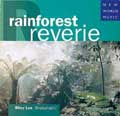
I was inspired to download an album from iTunes straight after the show – I chose Rainforest Reverie which combines Lee’s shakuhachi music with the natural sounds of a rainforest. You can hear a small snippet of one of the tracks here.
I love the music – it’s so calming, and perfect for anyone living in a bustling city who needs to get a sense of space and peace.
The shakuhachi grand master is as prolific as is he is talented. He teaches and performs frequently, and was the Artistic Director for the recent World Shakuhachi festival 2008, which brought together as many as 400 shakuhachi enthusiasts.
I was also fascinated to learn that Lee has developed a series of exercises that are designed to create an awareness of one's breath while improving the strength and control of the muscles used in breathing. His workshops last from one to six hours, and single sessions have been attended by as many as two thousand people. Wow!
If you’re stressed out and needing a good dose of relaxation, check out the magical music of Riley Lee’s shakuhachi.
Wednesday, April 9, 2008
Relaxing through meditation
According to a recent BBC documentary about meditation, some 10 million people in the Western world practice meditation.
The word meditation seems to mean many different things to different people. Some people associate it with prayer, others with breathing and relaxation, and yet others see it as something you do at the end of a yoga session.
SO...what is this thing called meditation?
The dictionary defines it in a number of ways:
1: to engage in contemplation or reflection
2: to engage in mental exercise (as concentration on one's breathing or repetition of a mantra) for the purpose of reaching a heightened level of spiritual awareness
3: to focus one's thoughts on : reflect on or ponder over
4: to plan or project in the mind : intend, purpose
It is also a key discipline in Buddhism – although that does not in itself, make it a religious act. According to The Friends of the Western Buddhist Order, meditation “is a means of transforming the mind. Buddhist meditation practices are techniques that encourage and develop concentration, clarity, and emotional positivity.”
To me, meditation is about quietening the mind and finding a peaceful place within myself (in amongst the to-do lists).
Sounds good huh! So why do some people find it difficult to do?
In my experience in “learning” how to meditate, the prospect of sitting by myself in quiet contemplation, being aware of my breathing and/or reciting a mantra, and attempting to let all thoughts pass through my mind without judgement, seemed ridiculously hard! My mind never seems to stop, so the idea of being still for even just 10 minutes a day - outside of sleep – was a foreign concept.
Over the years, I’ve tried meditation tapes, books and courses – and it certainly helped to be able to discuss the practice of meditation with other people in the same boat as me....ie clueless!
I eventually stumbled across guided meditations or visualisations, whereby a voice guides you into a safe, peaceful scene that’s intended to induce a deeply relaxed state – a state similar to what you might achieve by sitting still and be aware of your breathing. Low and behold, you’re meditating! My favourite guided meditations include:
- The Celestine Meditations, by Salle Merrill-Redfield (wife of The Celestine Prophesy’s author, James Redfield. There are two 25-minute sessions on this CD; the first does a guided walk through a growth forest, and the second, along a peaceful beach. - Morning and Evening Meditations by Louise L. Hay, that focus on being thankful for what you have, and starting and ending your day peacefully.
- Chakra Clearing: A Morning and Evening Meditation to Awaken Your Spiritual Power by Doreen Virtue, which help you to become aware of your body’s energy centres and the issues associated with each chakra. - There’s also a stack of free tracks available on iTunes under Podcasts.
Recordings like this can be great for beginners, or if you’re trying to maintain a meditation practice alone. I found that the more I listened to guided visualisations, the more I started to crave silence, rather than someone else’s voice. So I then started to explore the more traditional Buddhist techniques of mindful meditation.
To do this, I recently attended a weekend meditation retreat at the Rivendell Buddhist Retreat Centre, run by The Friends of the Western Buddhist Order. This introductory retreat gave a great overview of the concepts of mindful meditation, alternative sitting postures (that also help energy flow through the body), and general benefits of meditation. It was also really nice to meditate amongst other people. Almost everyone commented that it somehow felt more powerful to be quietly contemplating in a room with 20 other people.
The BBC documentary also spoke of the benefits of meditation, which amongst other things, included calmness, stress reduction, improvements in happiness and wellbeing, improved concentration and focus, mental alertness, and potential reductions in blood pressure in people with high blood pressure!
While I still struggle with meditating daily, or even every other day – I certainly find that when I do it, I feel very relaxed afterwards, sleep better, and generally feel calmer and happier.
In today’s frantic world, I reckon it’s worth taking whatever steps you can to induce a state of relaxation.
Do you meditate? Do you want to meditate but struggle? I’d love to hear your thoughts.
Subscribe to:
Posts (Atom)